01
Walk the beach
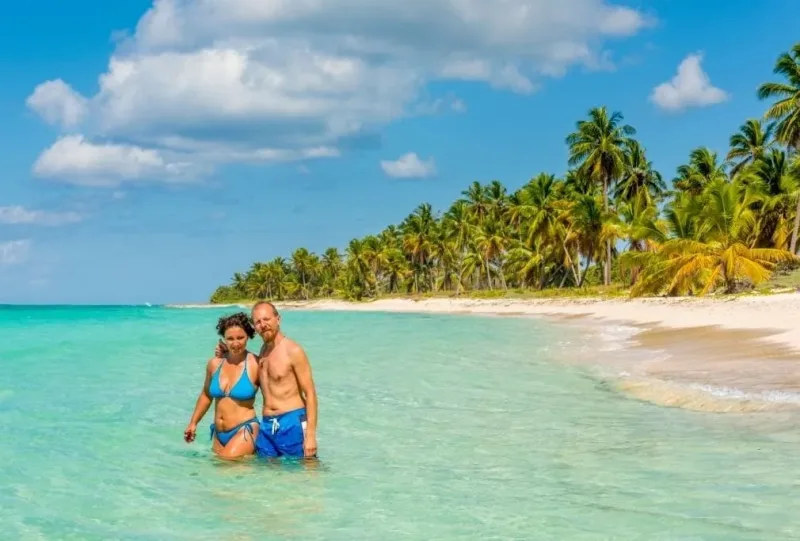
The painted-house row runs the length of the beach. Walk it slowly, both directions, camera ready.
Saona Island · Cotubanamá National Park
The only inhabited corner of Saona Island — a fishing village of a few hundred people, a line of pastel-painted wooden houses on the beach, hand-rolled cigars, fresh fish for lunch, and a sea-turtle conservation program quietly doing important work.
02 / What it is
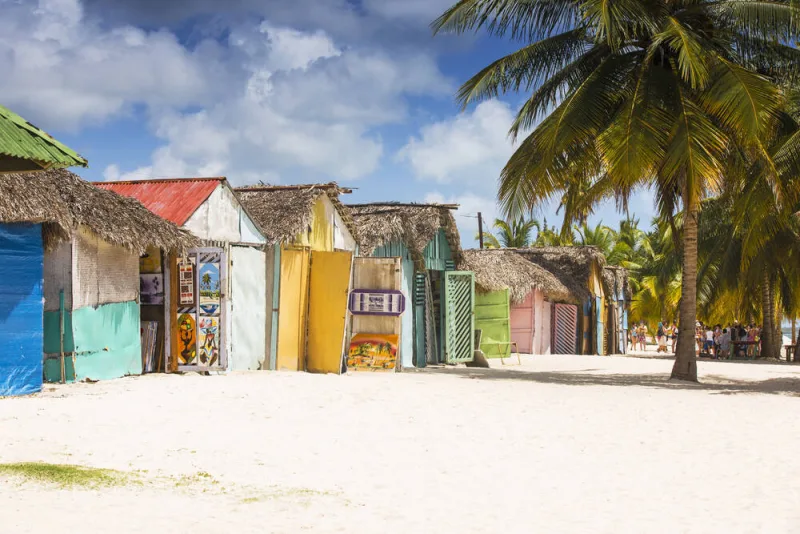
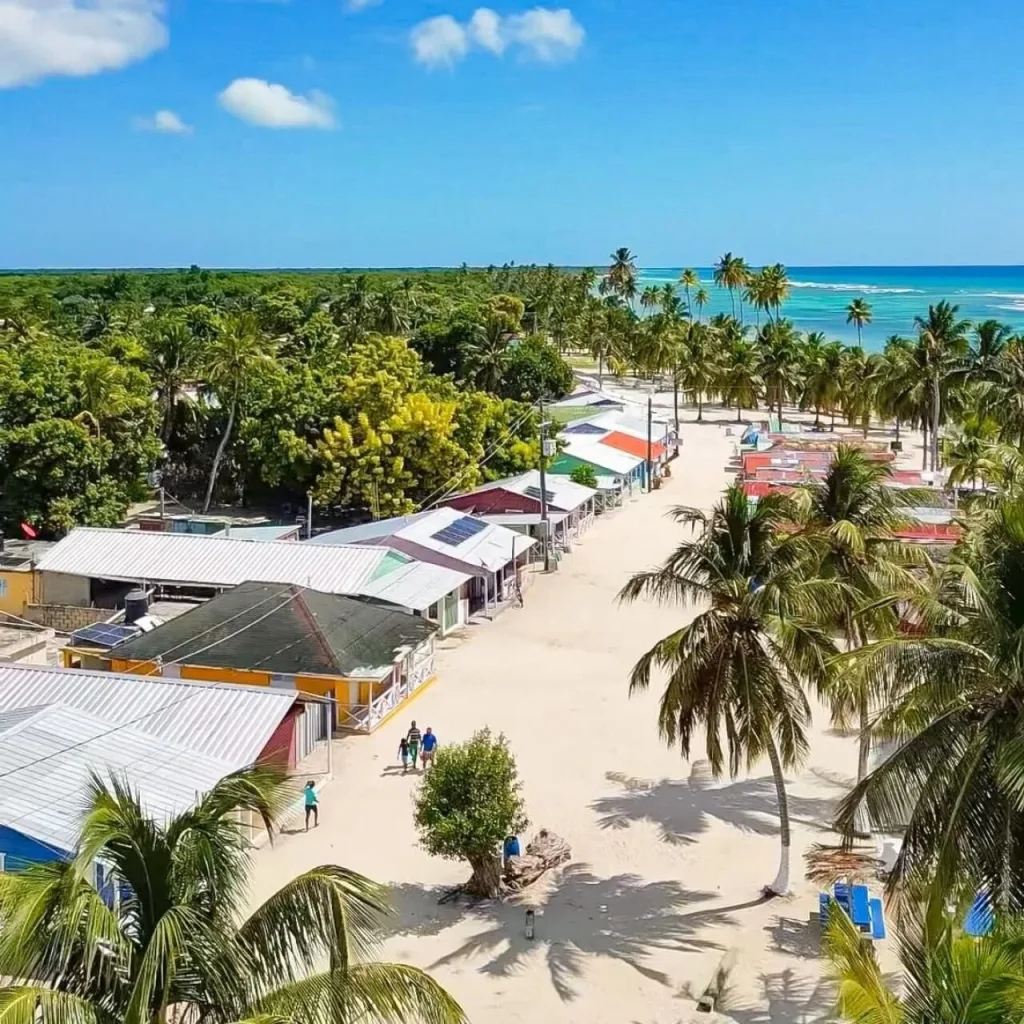
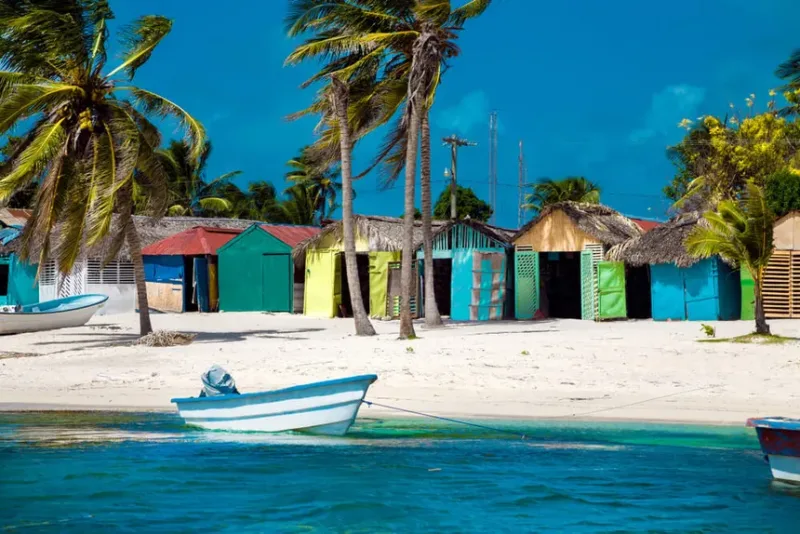
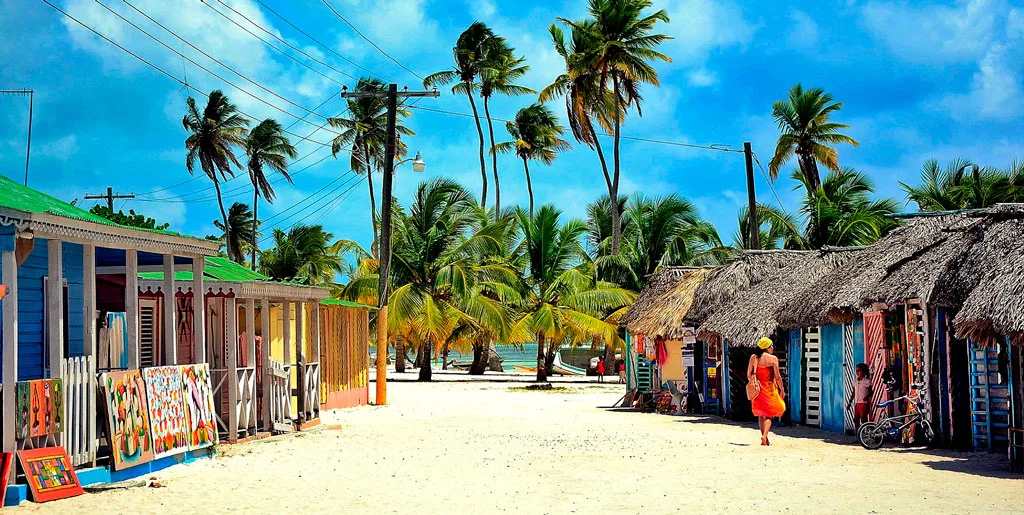
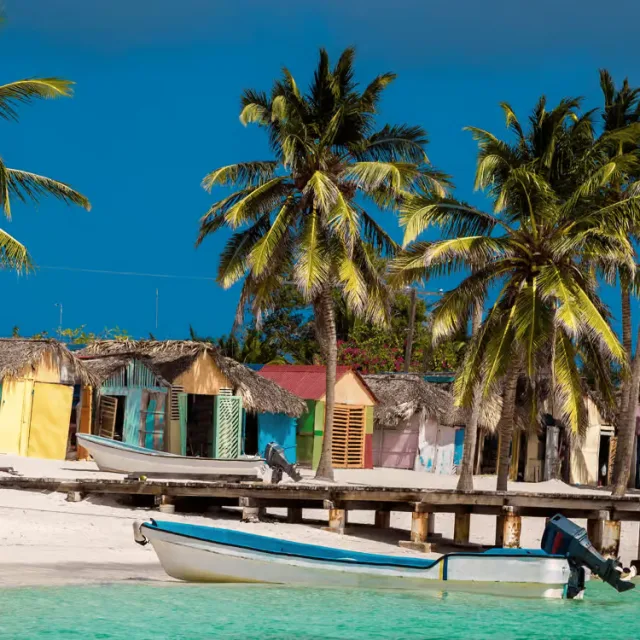
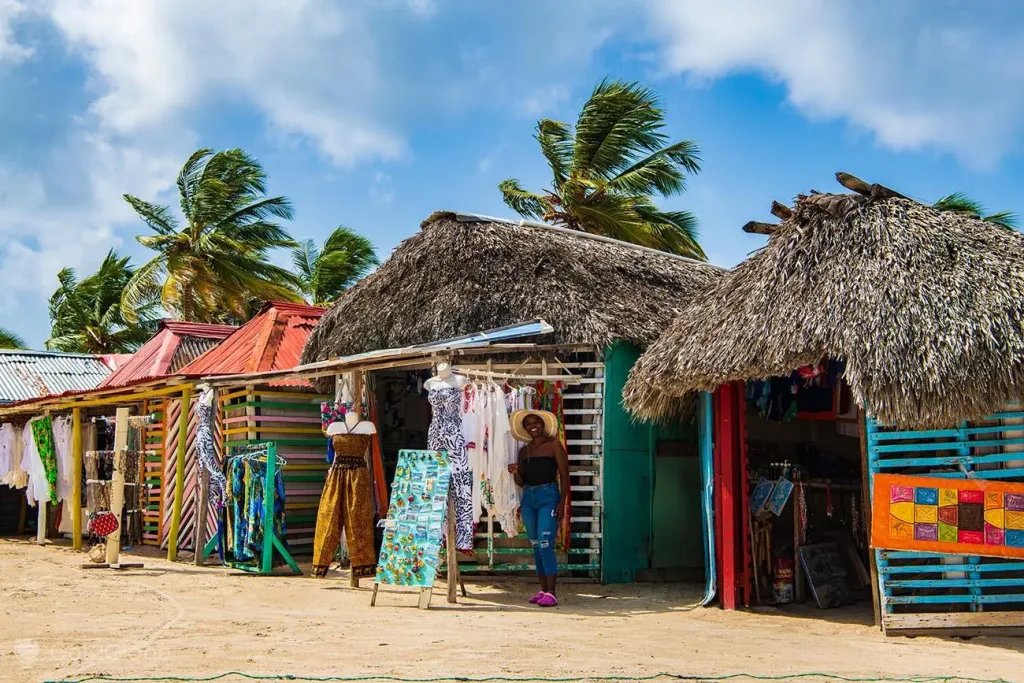
Mano Juan sits on Saona's southern coast, on a long stretch of white-sand beach lined with painted wooden houses — coral pink, sky blue, mint green, lemon yellow, every imaginable shade. Many are built on stilts. Most have a porch. All face the sea.
The community runs on its own time. Fishing in the early morning. Repairing nets through midday. The afternoon's for the tour boats — a few hundred guests pass through, buy a beer or a souvenir, walk the beach, and leave. Then the village is quiet again until sunrise.
A few hundred people live here. There is no road in. There is no airstrip. You arrive by boat or you don't arrive.
03 / The houses
The painted houses are why most travelers come. There is no committee, no rule, no curated palette — every family picks the color of their house, and they repaint when a storm or a season makes it necessary.
The signature shot
The line of houses runs roughly half a kilometer along the beach — coral, blue, yellow, green, every direction the camera turns.
Up close
Building style
The fleet
Hand-lettered
04 / Conservation
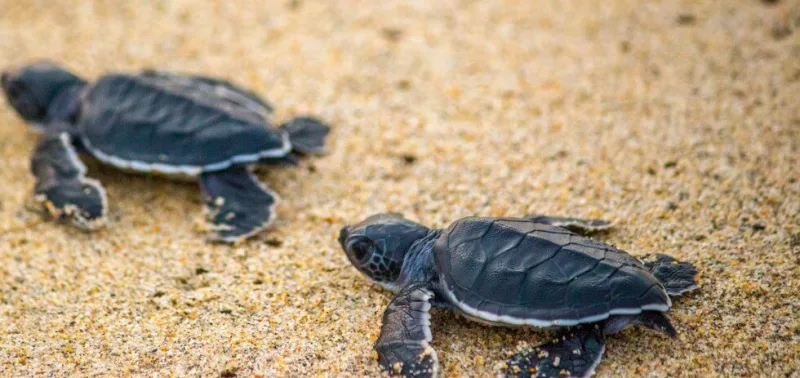
Mano Juan is also home to FUNDEMAR — the Dominican Foundation for Marine Studies — which runs a small visitor center and a turtle-nesting protection program on Saona's beaches. The work is quiet, important, and chronically underfunded.
Saona's beaches are a critical nesting site for hawksbill and green sea turtles in the Caribbean. Both species are threatened — hawksbills are critically endangered globally — and Mano Juan is one of the last places they reliably return.
Hours vary; a small donation in cash goes directly to the program.
05 / What to do
The village isn't built around tourist activities. Most of what travelers do in Mano Juan is unstructured — you walk the beach, you stop where something catches your eye.
01
The painted-house row runs the length of the beach. Walk it slowly, both directions, camera ready.
02
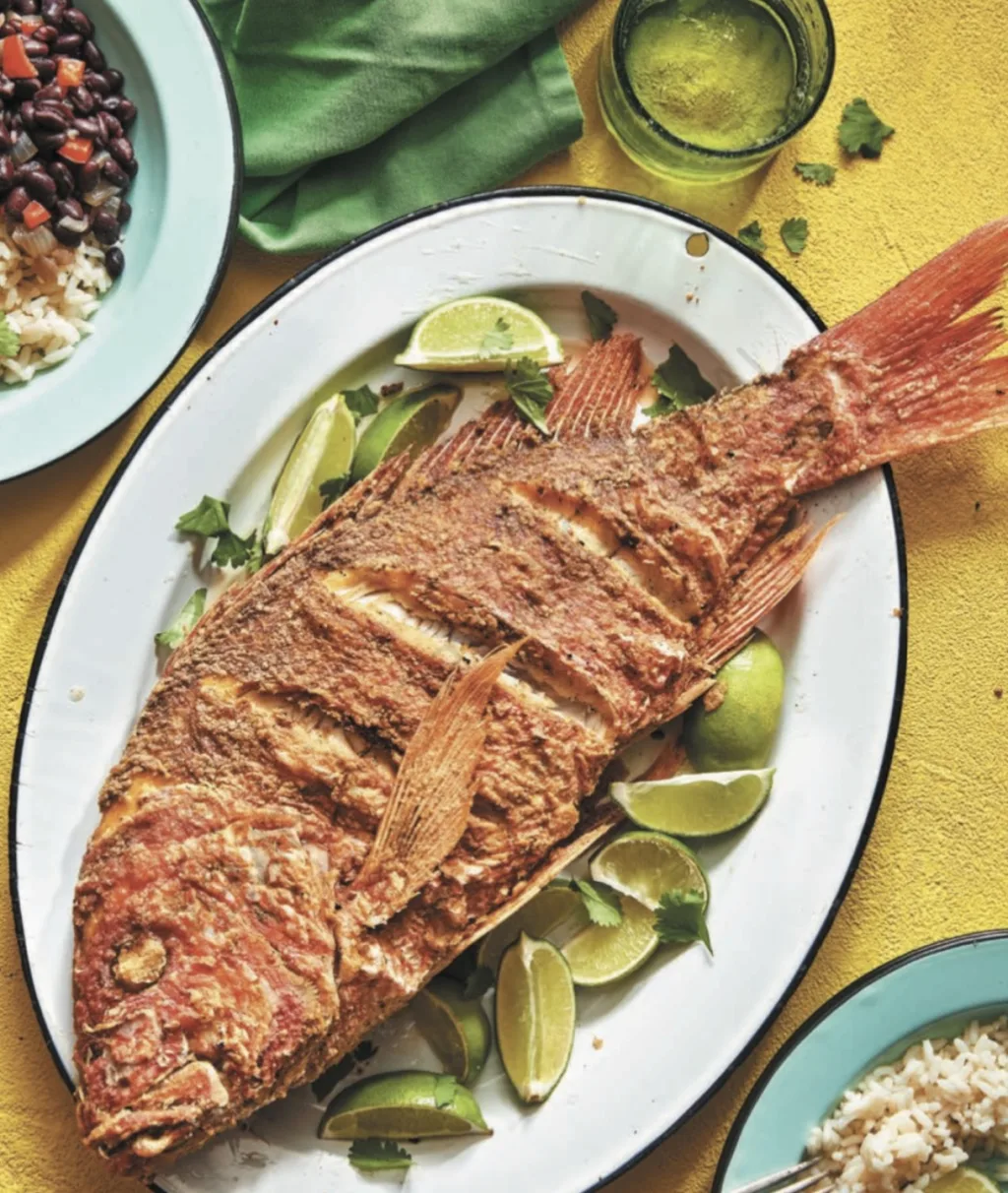
Caught that morning. Grilled simply. Served with rice and beans on a paper plate. Better than anything that'll come off the buffet later.
03
The turtle conservation center is a few minutes' walk from the main beach. Donations are appreciated and visible in the work.
04
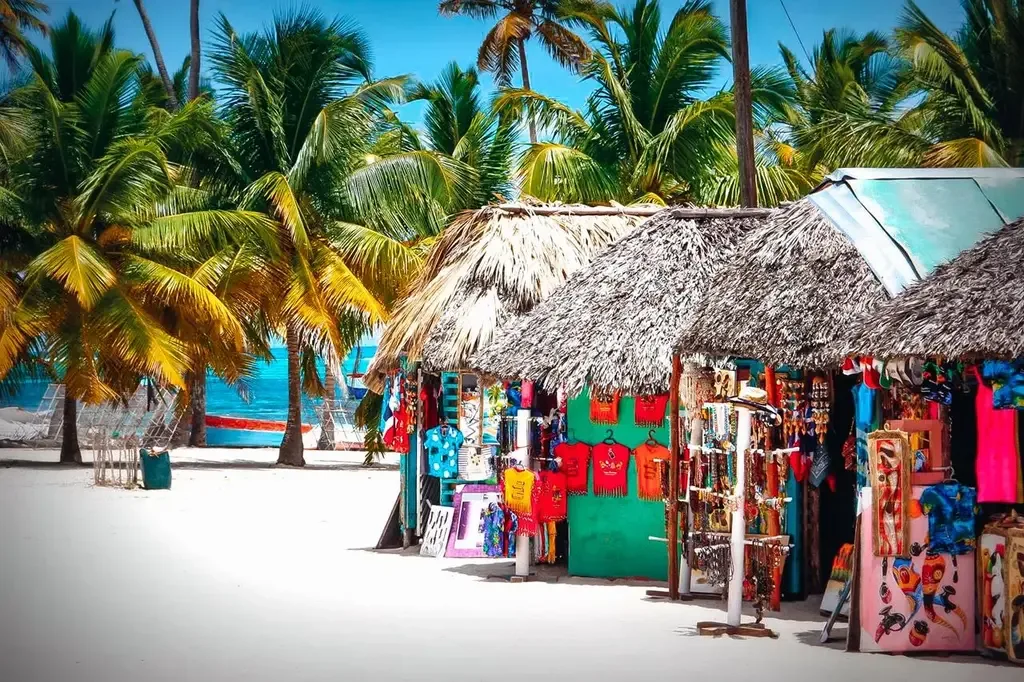
Hand-rolled cigars, painted shells, jewelry, art. Cash only — small US dollars or Dominican pesos. Tipping the maker directly matters.
06 / Getting there
Both leave from Bayahibe, both are full days, both pass through Mano Juan. The difference is how long you get to stay.
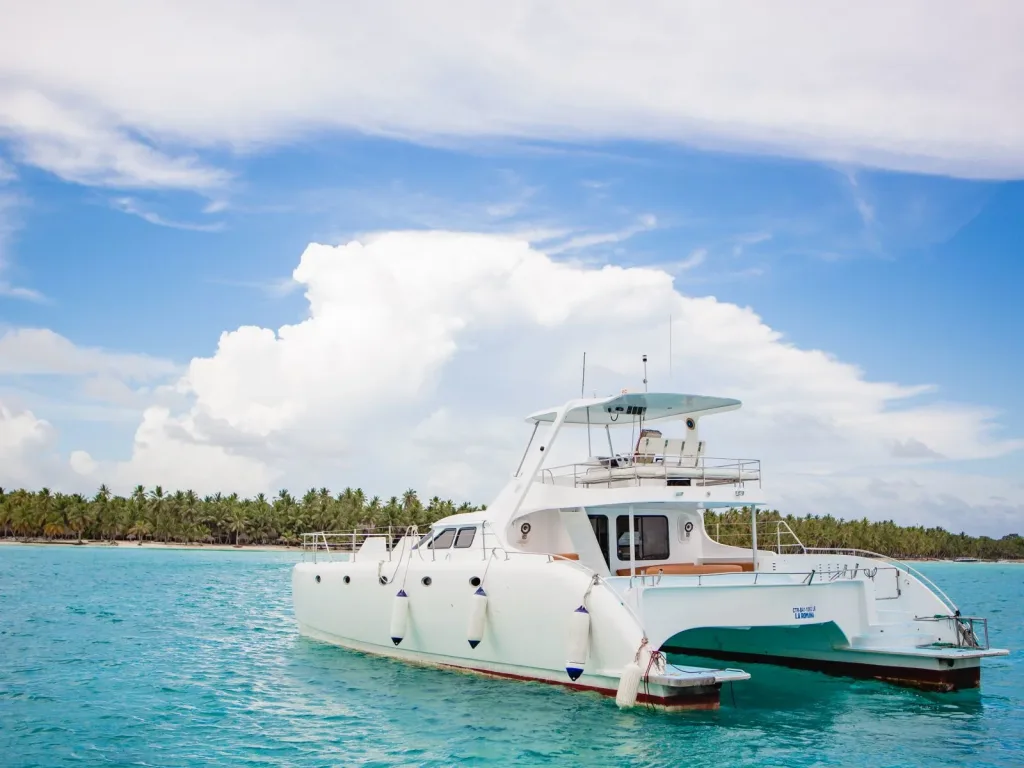
As long as you want
The flexible option. Stay an hour or stay the afternoon. Eat at the village instead of the standard buffet. Time the visit for late afternoon when the day tours have left and the village is calm again.
About private yacht charters →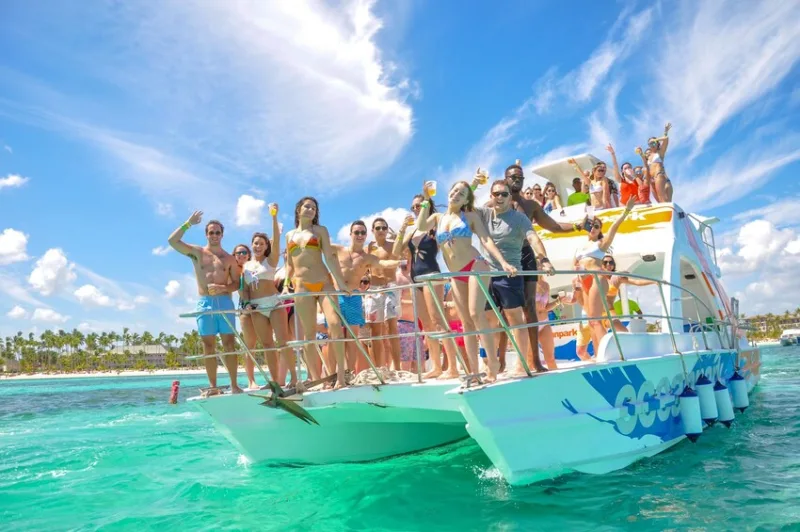
A 30 – 45 minute stop
The standard Saona day trip. Some operators stop at Mano Juan for half an hour after lunch; others pass close without disembarking. Confirm at booking if visiting the village specifically matters to you.
About the group excursion →07 / How to be a good visitor
Mano Juan isn't a theme park or a constructed attraction. People live in those houses. They go about their day around the visitors. A few small things make the difference between guest and tourist.
01
A simple "¿puedo?" works. Some welcome it warmly; some prefer privacy. Houses, boats, signs — those are fine to photograph freely.
02
The cigars hand-rolled in front of you at the village table. The painted shells from the family that made them. Money goes further when it stays in the village.
03
USD or DOP, both fine. No cards. A handful of $1, $5, $10 bills makes every transaction smoother and tip-friendlier.
04
Don't touch nests if you spot one. Don't shine flashlights at hatchlings at night. Donations to FUNDEMAR are the most useful contribution.
08 / Common questions
Don't see your question? Either desk can confirm whether their day includes a Mano Juan stop.
Mano Juan is the only inhabited village on Saona Island — a small fishing community of a few hundred people on the south coast, recognizable for its line of brightly painted wooden houses on the beach. It is also home to FUNDEMAR's sea-turtle conservation center, which protects nesting beaches around the island.
By boat, as part of any Saona Island excursion or charter from the Bayahibe marina. There is no road or airstrip — every visitor arrives by sea. Most group excursions either stop briefly at Mano Juan or pass close to the village; private yacht charters can spend as long as you want.
It depends on the operator. Some group tours stop at Mano Juan for 30–45 minutes after lunch; others pass nearby without disembarking. If visiting Mano Juan specifically matters to you, ask before booking — or charter privately and put it firmly on the itinerary.
Yes, when it is open. FUNDEMAR (Fundación Dominicana de Estudios Marinos) runs a small visitor area inside the village where you can learn about hawksbill and green-turtle conservation efforts on Saona. Hours vary; donations are appreciated and go directly to the program.
Local handicrafts, painted shells, hand-rolled cigars, jewelry, beachwear, fresh coconut water, cold beer (Presidente, El Presidente, occasionally Bohemia), and small plates of fish or chicken from beachside vendors. Bring small US dollar bills or Dominican pesos — cards are not accepted.
A handful of small, family-run beachside spots, mostly serving the morning catch — grilled fish, rice and beans, salad, plantains. They're informal and inexpensive. The village is not a dining destination; it's a working community where a few families also feed visiting boats.
The houses, beach, and boats are fine to photograph freely — they're what most visitors come for. For people, ask first. Some villagers welcome photos warmly, others prefer privacy. A small "¿Puedo?" (May I?) goes a long way, and a tip is appreciated if a posed shot is the result.
A few hundred — estimates vary between 300 and 500 depending on the season. Many residents are descendants of the original fishing families who settled the island generations ago. The village has a small school, a chapel, and a community-organized rhythm of fishing, conservation, and (recently) tourism.
Thirty minutes is enough for a quick walk along the beach and the main row of houses. An hour gives you time to visit FUNDEMAR, eat something, and shop. Two hours is the comfortable maximum on a private charter — beyond that, the village's rhythm goes back to its own quiet pace and there isn't much more for visitors to do.
09 / Plan a visit
A private charter can stay at Mano Juan as long as you want — or skip it if you'd rather not.
Most group days pass through. Ask the desk to confirm a Mano Juan stop on your specific operator.
Keep reading
Just your group, your captain, your day. The premium way to see the island.
Read on → Sailboat over, speedboat back, lunch on the island. The classic Caribbean day trip.
Read on →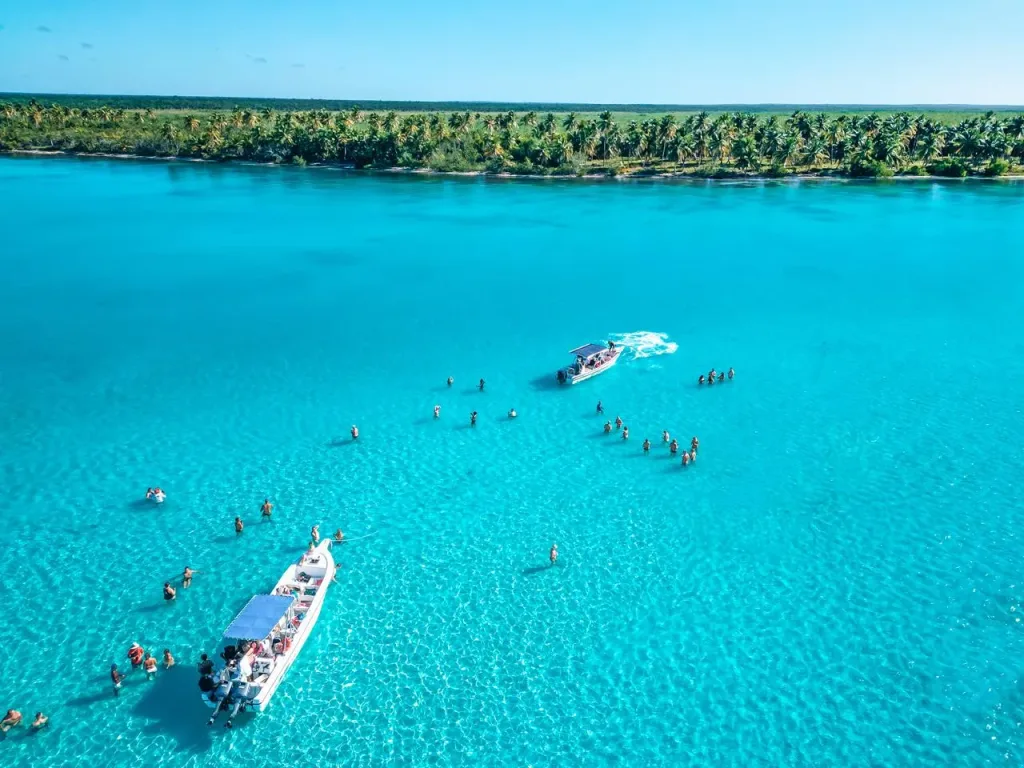
The sandbar a kilometer from shore where you stand waist-deep in the open Caribbean.
Read on →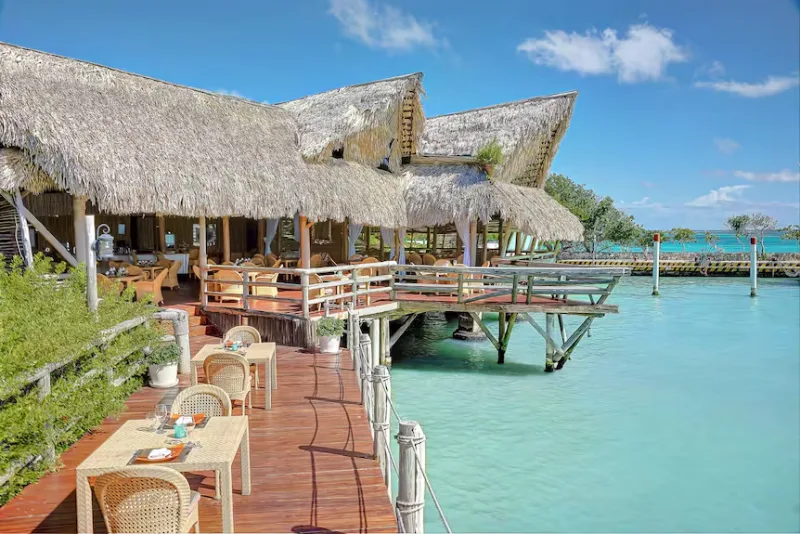
70 km south, 90 minutes by road, then 45 minutes by sea — all in one day from any Punta Cana resort.
Read on →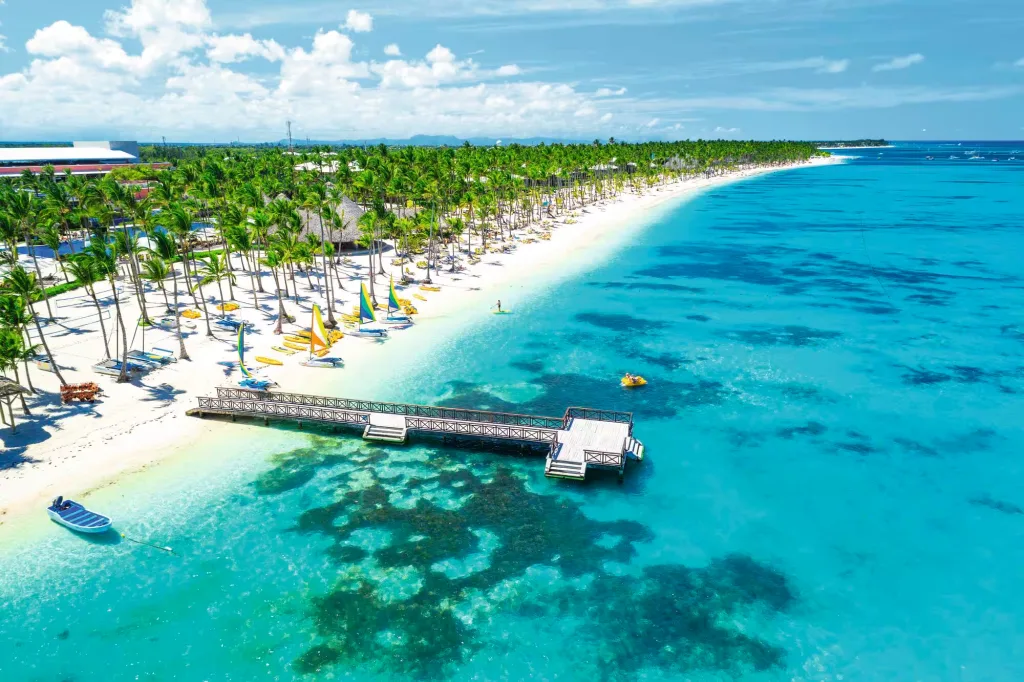
Pickup at any Bávaro Beach all-inclusive — the country's biggest hotel zone — for the day to Saona Island.
Read on →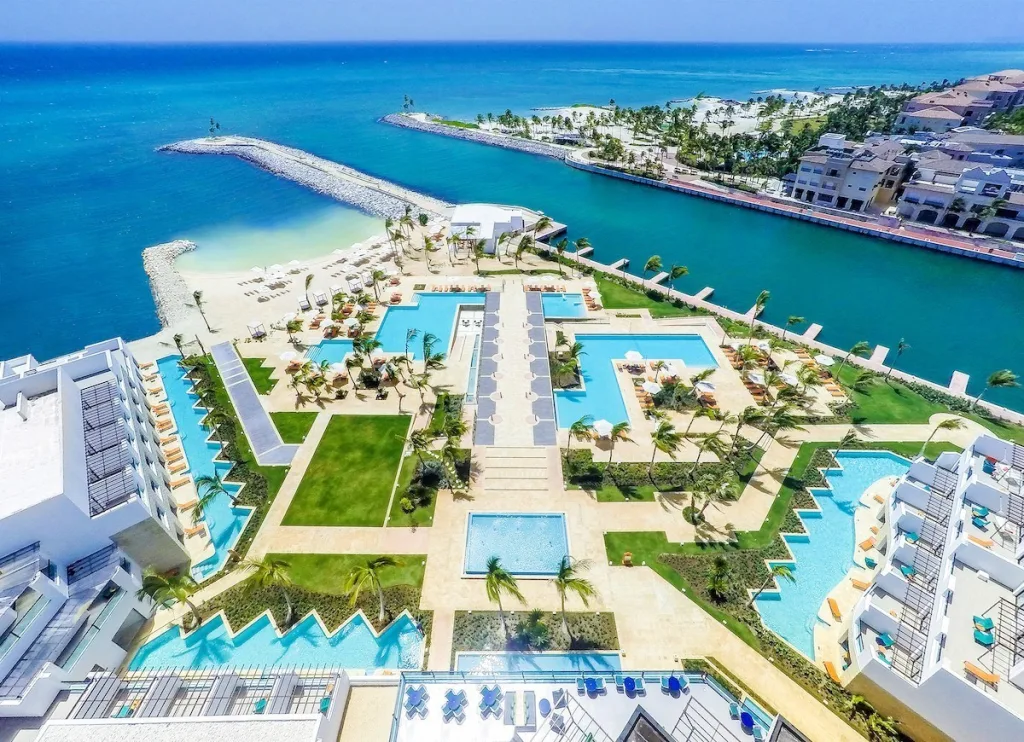
The premium way to do the day from the corridor's luxury enclave — picked up at Eden Roc, Secrets, Hyatt Zilara, and the rest.
Read on →
Two islands, twenty kilometers apart, very different days. Which one is right for your trip.
Read on →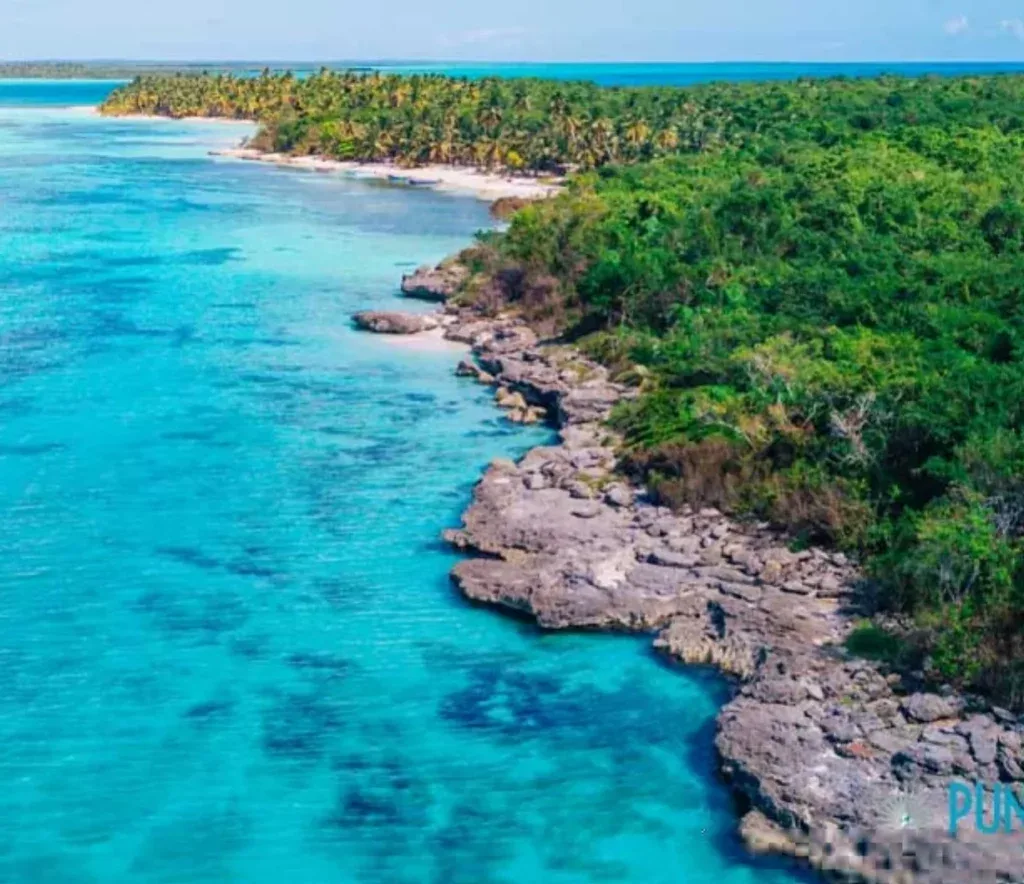
The protected southeastern peninsula — mangroves, dry forest, Taíno caves, and the chief whose name it carries.
Read on →
Group excursions from $89 per person, private yachts from $1,800 per boat. The full pricing breakdown.
Read on →